

High-performance conformal coatings for sensors, electronics, and medical devices engineered for reliability from surface prep to final inspection.
Unlike liquid coatings, Parylene polymerizes directly on the surface inside a vacuum chamber, coating every contour evenly and without stress.
Why engineers choose Parylene
Parylene N is the base, linear form of the polymer, known for its excellent dielectric performance and superior crevice penetration, making it ideal for high-frequency electronics and complex geometries.
Parylene C is the most widely used variant, distinguished by its strong moisture and chemical barrier properties, giving it high corrosion resistance and making it a top choice for electronics, medical devices, and aerospace components.
Parylene D is characterized by higher thermal stability and greater resistance to harsh chemicals compared to C, making it suitable for elevated-temperature or chemically aggressive environments.
| Parylene N | Parylene C | Parylene D | Testing Method (ASTM) | ||
|---|---|---|---|---|---|
| Dielectric Strength (volts/mil) | 7000 | 6900 | 5500 | D149 | |
| Dielectric Constant | 60Hz | 2.65 | 3.15 | 2.84 | D150 |
| 1 kHz | 2.65 | 2.83 | 2.82 | ||
| Dissipation Factor | 60Hz | 0.0002 | 0.027 | 0.004 | |
| 1 kHz | 0.0002 | 0.015 | 0.003 | ||
| Volume Resistivity (Ω-cm) | 1.4 x 10¹⁷ | 6.9 x 10¹⁶ | 2 x 10¹⁶ | D257 | |
| Surface Resistivity (Ω) | 1.0 x 10¹³ | 2.2 x 10¹⁵ | 5 x 10¹⁶ | ||
| Coefficient of Friction | 0.25 | 0.29 | 0.33 | D1894 | |
| Service Temperature | 90°C | 110°C | 120°C | – | |
Description

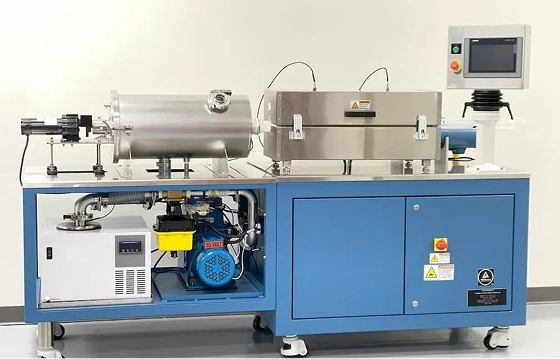
Designed for high-throughput production and parts with complex geometry. A rotating horizontal chamber gently tumbles components, ensuring uniform Parylene coverage on every surface. Explore Horizontal Drum System
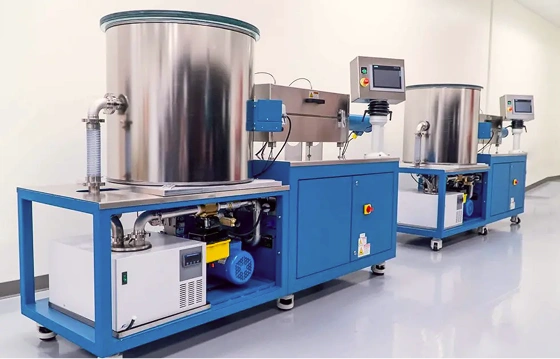
A compact, static deposition system ideal for R&D and low-volume production. Parts remain fixed on fixtures inside a vertical chamber for precise film-thickness control and quick recipe setup. Explore Vertical Static System
Our process
Parts are cleaned, dried, and masked for coating. Surface prep ensures strong adhesion and film integrity.
Parylene dimer is vaporized, pyrolyzed, and polymerized under vacuum to form a thin, uniform film on all exposed surfaces.
After coating, masking is removed, and each batch is inspected for thickness, adhesion, and uniformity.
Applications