

Precision coatings.
Proven performance.

High-performance conformal coatings for sensors, electronics, and medical devices engineered for reliability from surface prep to final inspection.

Parylene is a family of vapor-deposited polymer films that form ultra-thin, pinhole-free dielectric barriers.

Unlike liquid coatings, Parylene polymerizes directly on the surface inside a vacuum chamber, coating every contour evenly and without stress.

Why engineers choose Parylene

  • Complete conformal coverage on any geometry
  • Transparent, biocompatible, and ultra-lightweight
  • High dielectric performance at minimal thickness
  • Exceptional moisture, chemical, and corrosion resistance
  • Applied at room temperature, no cure, no distortion

Parylene N

Parylene N is the base, linear form of the polymer, known for its excellent dielectric performance and superior crevice penetration, making it ideal for high-frequency electronics and complex geometries.

  • Best conformality and edge coverage
  • Highest dielectric strength per thickness
  • Excellent surface penetration and adhesion
  • Transparent and non-yellowing

Parylene C

Parylene C is the most widely used variant, distinguished by its strong moisture and chemical barrier properties, giving it high corrosion resistance and making it a top choice for electronics, medical devices, and aerospace components.

  • Low permeability to gases
  • Superior resistance to moisture and solvents
  • Biocompatible and biostable (ISO 10993)
  • Strong, flexible, and reliable over time

Parylene D

Parylene D is characterized by higher thermal stability and greater resistance to harsh chemicals compared to C, making it suitable for elevated-temperature or chemically aggressive environments.

  • Maintains dielectric strength under heat and stress
  • Continuous service up to 120 °C
  • Excellent adhesion on metals and polymers
  • Durable film with minimal degradation
 Parylene NParylene CParylene DTesting Method (ASTM)
Dielectric Strength (volts/mil)700069005500D149
Dielectric
Constant
60Hz2.653.152.84D150
1 kHz2.652.832.82
Dissipation
Factor
60Hz0.00020.0270.004
1 kHz0.00020.0150.003
Volume Resistivity (Ω-cm)1.4 x 10176.9 x 10162 x 1016D257
Surface Resistivity (Ω)1.0 x 10132.2 x 10155 x 1016
Coefficient of Friction0.250.290.33D1894
Service Temperature90°C110°C120°C

Request a Quote

Additional Paratronix Parylene Coating Service Compliances

Description

  • ITAR Registered
  • REACH Compliant
  • RoHS Compliant
  • ANSI/ESD S20.20 Compliant
  • Meets requirements of IPC-CC-830/MIL-I-46058
  • USP Class VI Certifications (Biocompatibility)

View Quality Standards Page

Our Coating Systems

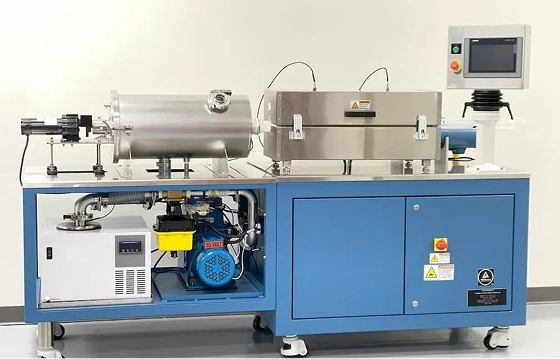
Viking Series Model H1092

Horizontal Drum SystemViking® Series Model H1092

Designed for high-throughput production and parts with complex geometry. A rotating horizontal chamber gently tumbles components, ensuring uniform Parylene coverage on every surface. Explore Horizontal Drum System
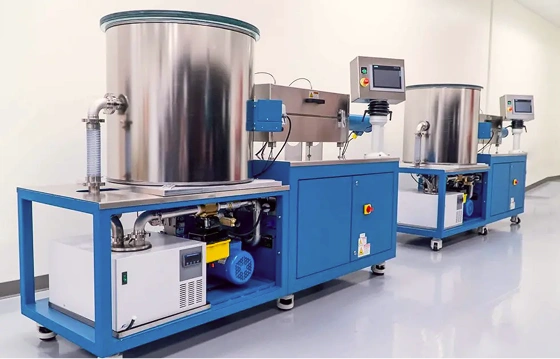
Viking Series Model V494

Vertical Static System Viking ® Series Model V494

A compact, static deposition system ideal for R&D and low-volume production. Parts remain fixed on fixtures inside a vertical chamber for precise film-thickness control and quick recipe setup. Explore Vertical Static System

Our process

Controlled deposition. Consistent results.

  • Preparation

    Parts are cleaned, dried, and masked for coating. Surface prep ensures strong adhesion and film integrity.

  • Deposition

    Parylene dimer is vaporized, pyrolyzed, and polymerized under vacuum to form a thin, uniform film on all exposed surfaces.

  • Inspection

    After coating, masking is removed, and each batch is inspected for thickness, adhesion, and uniformity.

The Parylene process

Applications

Real-world uses of parylene coatings