
Navigation

Overview

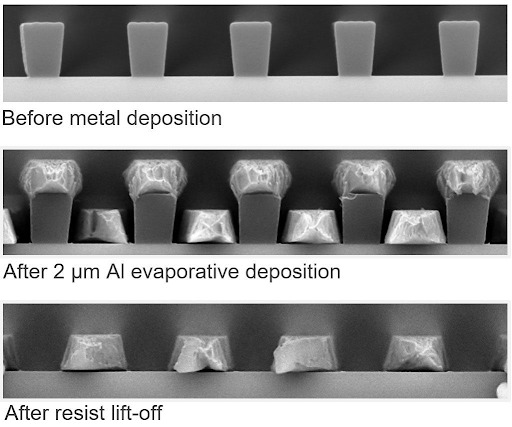
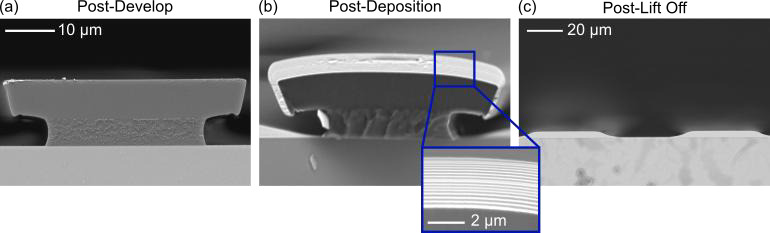
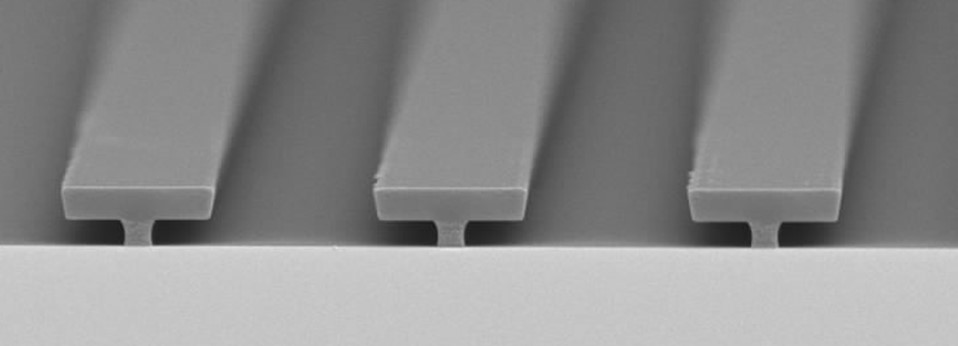
UniLOR® N is a negative‑tone, chemically amplified co‑polymer resist designed for single and bi-layer lift off processes. Available in four viscosities, it offers adjustable wall profiles and high thermal stability across 1–6 μm film thicknesses in a single coat.

UniLOR® is easily removable and fully compatible with aqueous alkaline developers, providing reliable performance for advanced microfabrication workflows.

Key features

  • Negative tone, chemically amplified resists
  • 1 to 6 μm film thickness range
  • i-Line/Broadband sensitivity, 1:1 aspect ratio capability
  • Adjustable sidewall profile angle
  • Aqueous alkaline development (standard 0.26N TMAH developers)
  • Suitable for metal evaporation physical vapor deposition processes
  • Pattern thermal stability up to 200°C
  • Clean removal with standard photoresist removal chemistries
  • Suitable as top imaging resist in bi-layer lift-off processes

Documentation

Tech Reference #1

Bi-layer lift-off resist process optimization of insulator film for neural probe fabrication
B.Wadja et al., 32nd SEMI Advanced Semiconductor Manufacturing Conference (ASMC)

Download Publication

Tech Reference #2

Lift-off resist for optical filters using high-temperature sputtering
A. Rendos et al., SPIE Advanced Fabrication Technologies for Micro/Nano Optics and Photonics XIX, 2026

Download Publication

Recommended ancillaries

Remover PG

To strip PMGI, LOR, PMMA, KMPR® 1000 & minimally cross-linked SU-8 resists
Add to Quote

CD26 Developer

Add to Quote

EBR PG

Edge Bead Remover
Add to Quote

Process parameters

Coat

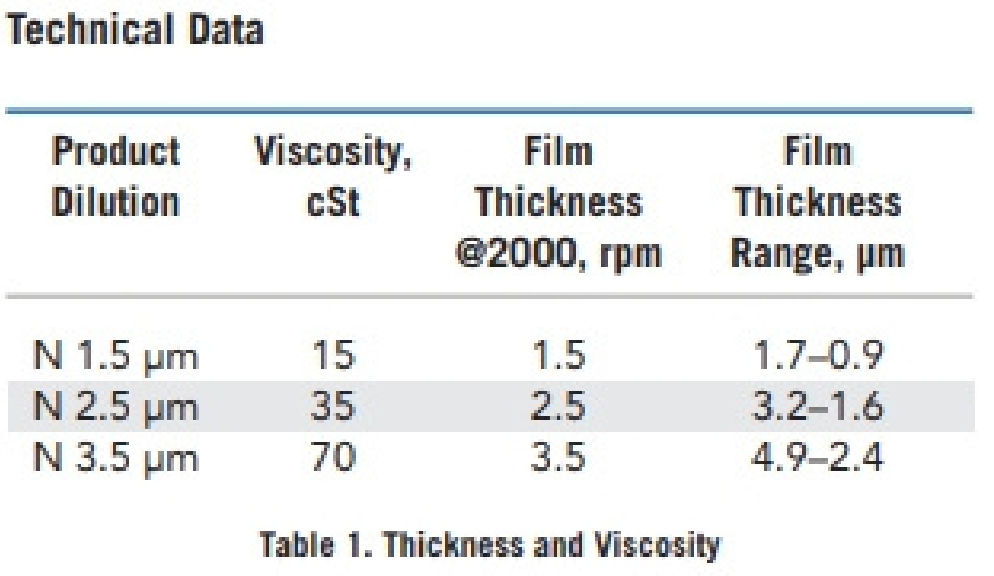
UniLOR® N resist is available in three standard viscosities that range in film thickness (Table 1). The film thickness vs. spin speed curves are displayed in 1A, 1B and 1C for various air flows. The curves were generated using static dispense on 6″ (150 mm) silicon wafers and a soft bake of 115°C on a level hot plate. Please note that the exact thickness obtained may be slightly offset from curves in Figure 1 due to equipment type, setting differences and room conditions, as demonstrated by varying exhaust level. For clean lift-off processing, LOR/PMGI films should be thicker than the deposited metal film, typically by 33%.
Recommended Coating Conditions

  1. Dispense: Approximately 1 ml of UniLOR® N per inch (25 mm) of substrate diameter
  2. Spread Cycle: Spin to 500 rpm for 5 –10 seconds with acceleration ramp of 500 rpm/second.
  3. Spin Cycle: Ramp to final speed with acceleration of 500 rpm/second and hold for 30 seconds.

unilor thickness and viscosity table

Soft Bake & Edge Bead Removal

The primary function of the soft bake process is to dry the UniLOR® N film. A 115°C soft bake for 2 minutes on a level hotplate with good thermal control and uniformity is recommended. UniLOR® N film typically remains slightly tacky after soft bake.

During the spin coating process, a build-up of photoresist can occur on the outer edge of the substrate, especially for thicker resist coatings. Although an edge bead has not been observed in UniLOR® N film, it can be removed by directing a small stream of Kayaku Advanced Materials’ EBR PG at the edge of the wafer. An edge bead removal step can be done immediately following soft bake using Kayaku Advanced Materials’ EBR PG. A 65°C bake for a minimum of 1 minute is necessary to drive off any remaining solvent following EBR. For edge bead removal using EBR PG, please refer to the EBR PG technical data sheet.

Soft Bake & Edge Bead Removal

The primary function of the soft bake process is to dry the UniLOR® N film. A 115°C soft bake for 2 minutes on a level hotplate with good thermal control and uniformity is recommended. UniLOR® N film typically remains slightly tacky after soft bake.

During the spin coating process, a build-up of photoresist can occur on the outer edge of the substrate, especially for thicker resist coatings. Although an edge bead has not been observed in UniLOR® N film, it can be removed by directing a small stream of Kayaku Advanced Materials’ EBR PG at the edge of the wafer.

An edge bead removal step can be done immediately following soft bake using Kayaku Advanced Materials’ EBR PG. A 65°C bake for a minimum of 1 minute is necessary to drive off any remaining solvent following EBR. For edge bead removal using EBR PG, please refer to the EBR PG technical data sheet.
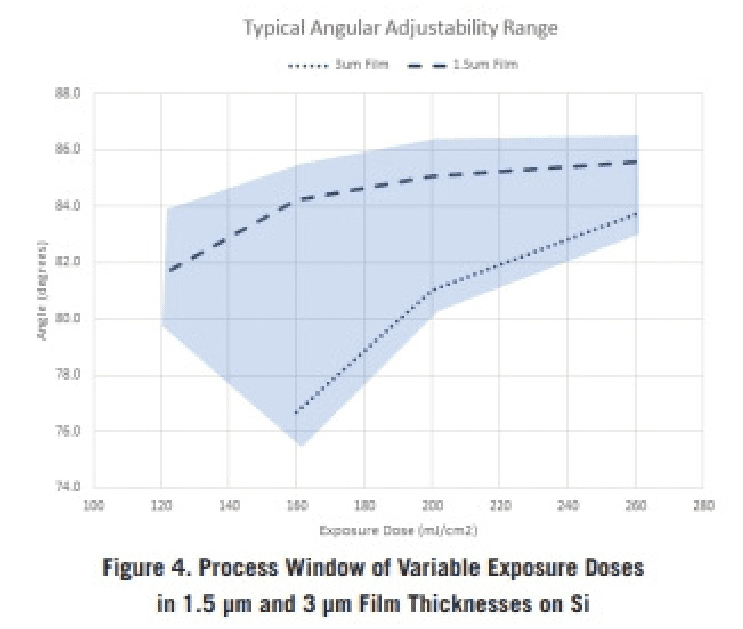
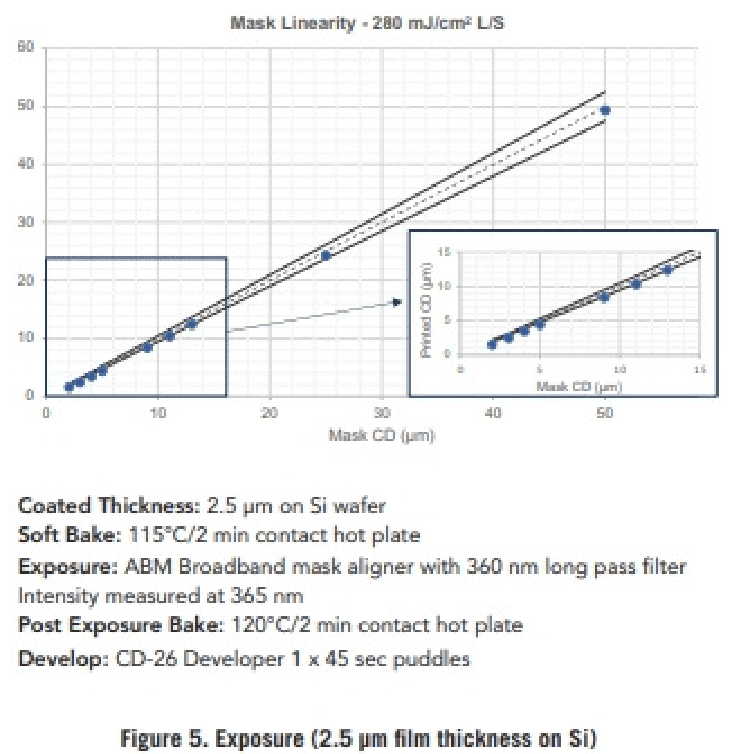
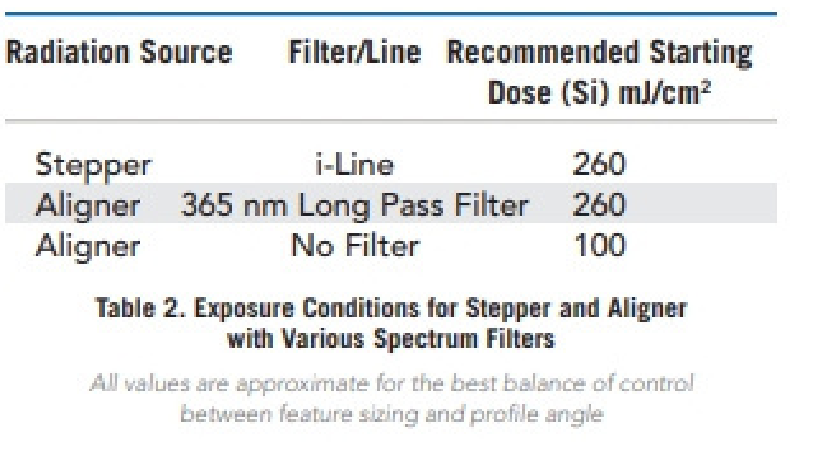
unilor exposure conditions table

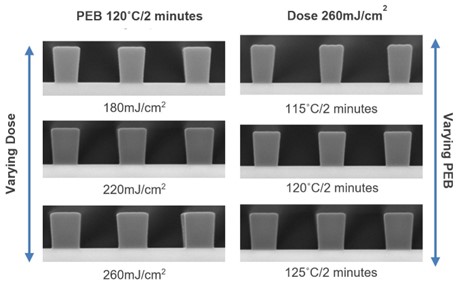
unilor varying exposure dose

unilor process window table

unilor exposure table

Development

UniLOR® N resist is compatible with TMAH based developers, including surfactant and surfactant-free variations. Development methods such as immersion, spray, puddle or spray/puddle may be used. Process optimization is necessary for different developer chemistries to achieve desired performance.

Once optimized, it is a quick and simple process. A recommended spray/puddle step uses 2.38% TMAH (0.26N) at 23˚C for one 45 second developer puddle.
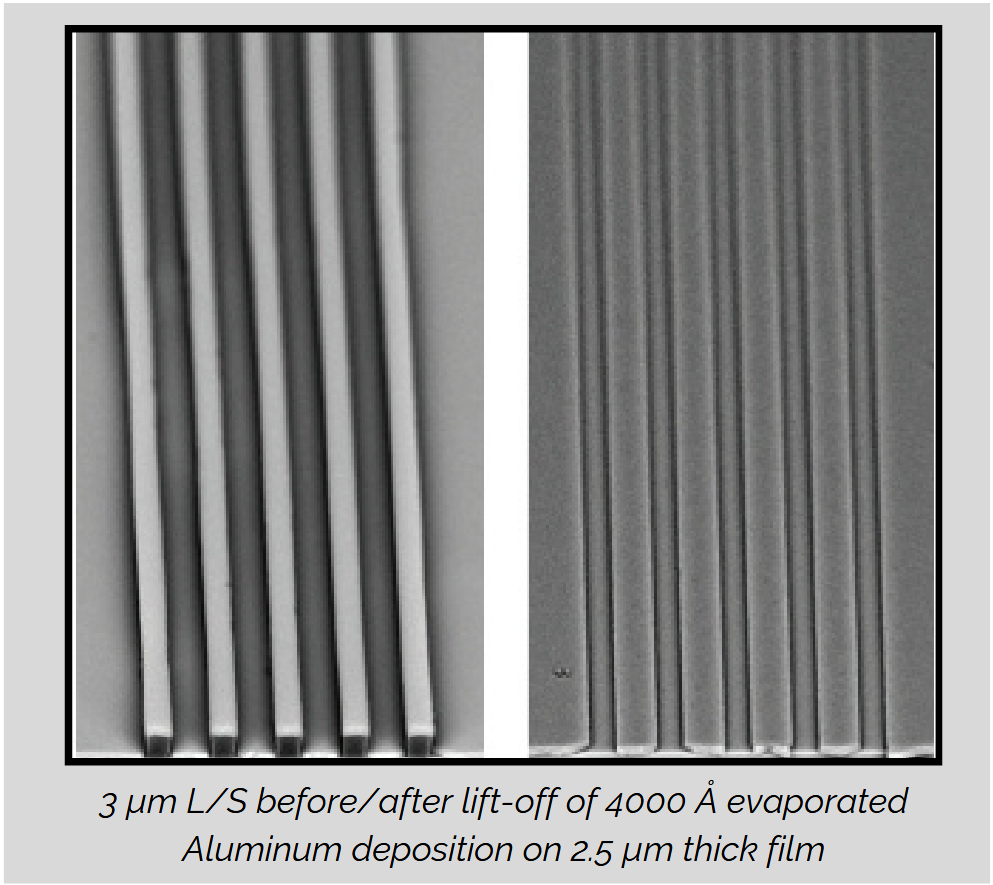
3 µm line-and-space microstructures

Downloads