
Navigation

Overview

As an improved formulation of the original SU‑8 and SU‑8 2000, SU‑8 3000 offers enhanced adhesion, reduced coating stress, and reliable performance trusted by MEMS manufacturers.

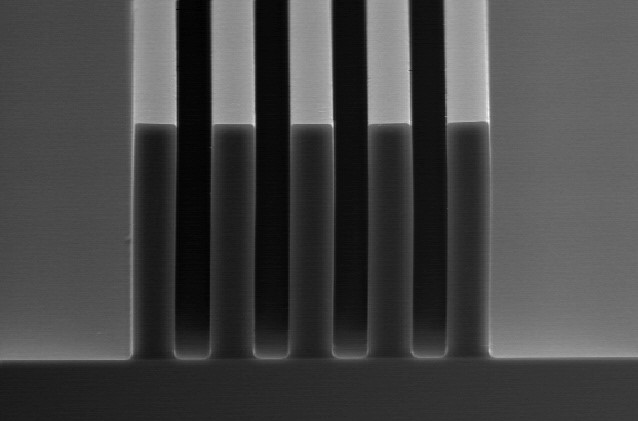
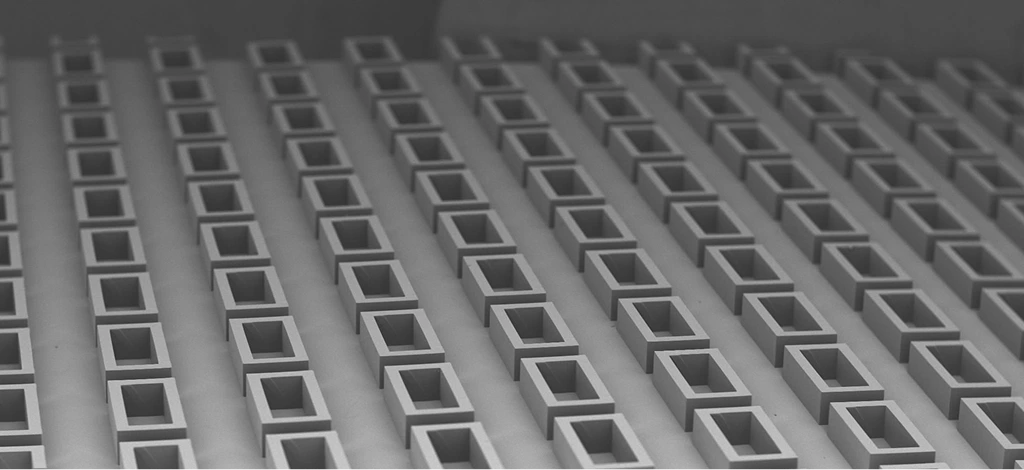
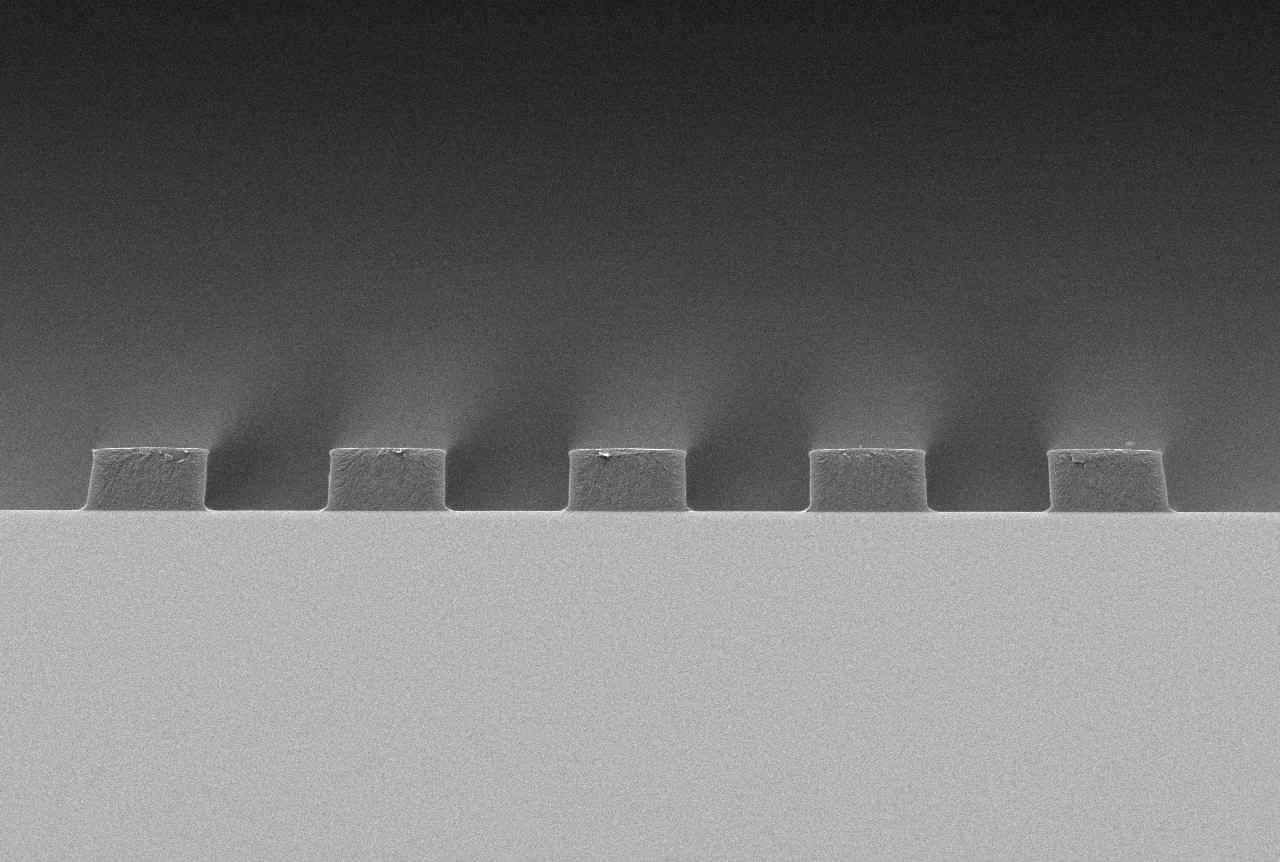
With viscosities that support 2-50 μm film thickness in a single coat, this delivers excellent imaging quality and can produce high‑aspect‑ratio structures over 5:1. Its strong optical transmission above 360 nm enables precise patterning and near‑vertical sidewalls in thick films.

Designed for durability, SU‑8 3000 is ideal for permanent microfabrication applications where the resist is imaged, cured, and left in place.

Key features

  • Improved adhesion
  • Reduced coating stress
  • Vertical sidewalls
  • Excellent dry etch resistance
  • 2-50 μm film thickness in a single coat
  • High aspect ratio of 5:1

Application Notes

Documentation

Tech Reference #1

Enabling fast microfluidic chips fabrication: A practical guideline for microfluidics design and fabrication using photolithography for fast prototyping
Zhang, Z. et al., Journal of Micromanufacturing, 2025

Download Publication

Recommended ancillaries

EBR PG

Edge Bead Remover
Add to Quote

CP Thinner

To dilute SU-8 3000 & KMPR® 1000 resists.
Add to Quote

SU-8 Developer

SU-8, SU-8 3000, SU-8 TF 6000, SU-8 XFT 75 & 100, KMPR 1000, and KMSF 2000 resist development.
Add to Quote

Remover PG

To strip PMGI, LOR, PMMA, KMPR® 1000 & minimally cross-linked SU-8 resists
Add to Quote

Process parameters

Coat

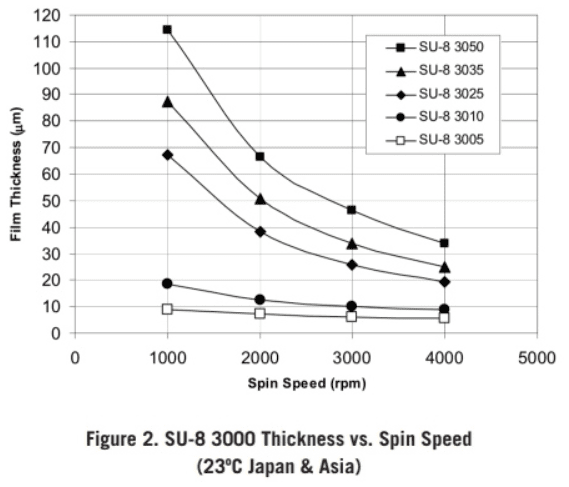
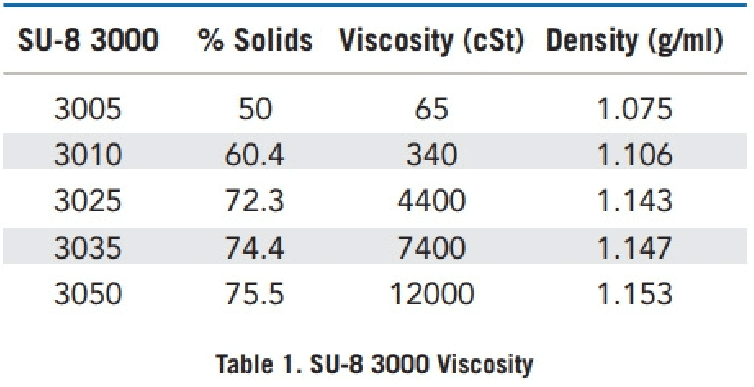
SU-8 3000 resists are available in five standard viscosities, shown in Table 1. Figure 1 provides the information required to select the appropriate SU-8 3000 resist and spin conditions to achieve the desired film thickness.

Recommended Coating Conditions

  1. Dispense 1 ml of resist for each inch (25 mm) of substrate diameter
  2. Spin at 500 rpm for 5-10 sec with acceleration of 100 rpm/second
  3. Spin at 3000 rpm for 30 sec with acceleration of 300 rpm/second
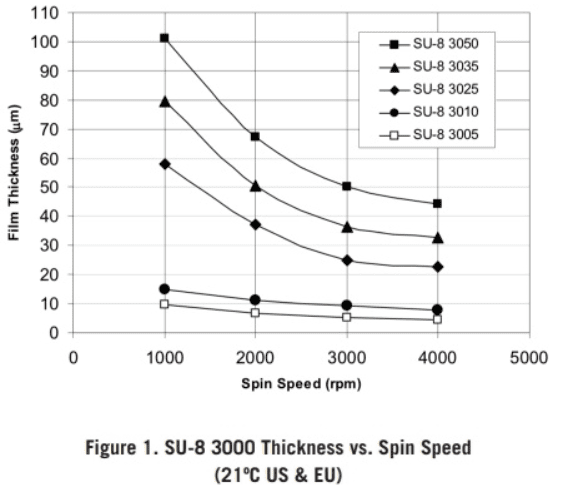
su 3000 figure 1

su 3000 figure 2

su 3000 table

Soft Bake

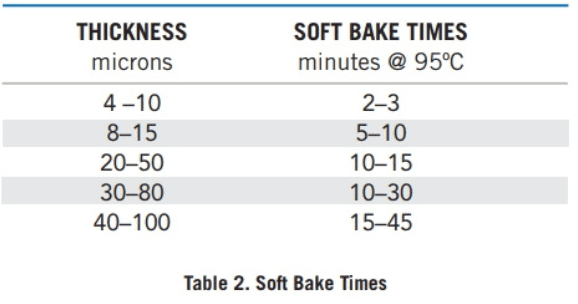
A level hotplate with good thermal control and uniformity is recommended for use during the soft bake step of the process. Convection ovens are not recommended. During convection oven baking, a skin may form on the resist. This skin can inhibit the evolution of solvent, resulting in incomplete drying of the film and/or extended bake times. Table 2 shows the recommended soft bake temperatures and times for the various SU-8 3000 products at selected film thicknesses.

Note:

To optimize the baking times/conditions, remove the wafer from the hotplate after the prescribed time and
allow to cool to room temperature. Then, return the wafer to the hotplate. If the film wrinkles, leave the
wafer on the hotplate for a few more minutes. Repeat the cool-down and heat-up cycle until wrinkles are no
longer seen in the film after placing the wafer on the hotplate.


su 3000 table 2

Exposure

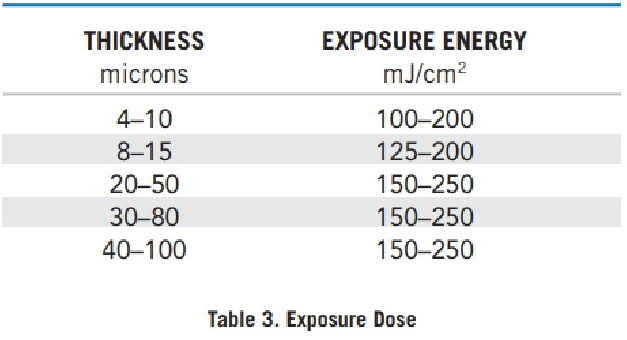
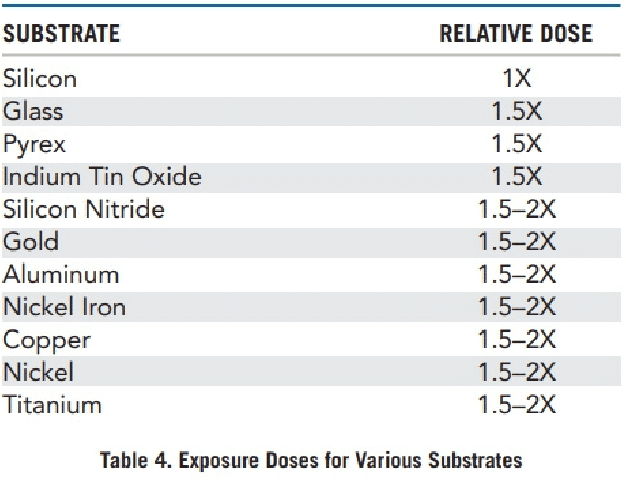
To obtain vertical sidewalls in the SU-8 3000 resist, we recommend the use of a long pass filter to eliminate UV radiation below 350 nm. With the recommended filter PL-360-LP from Omega Optical www.omegafilters.com or a 365 nm cut off filter, an increase in exposure time of approximately 40% is required to reach the optimum exposure dose.

Note:

Optimal exposure will produce a visible latent image within 5-15 seconds after being placed on the PEB hotplate and not before. An exposure matrix experiment should be performed to optimize the exposure dose.

su 3000 table 3

su 3000 table 4

Post Exposure Bake

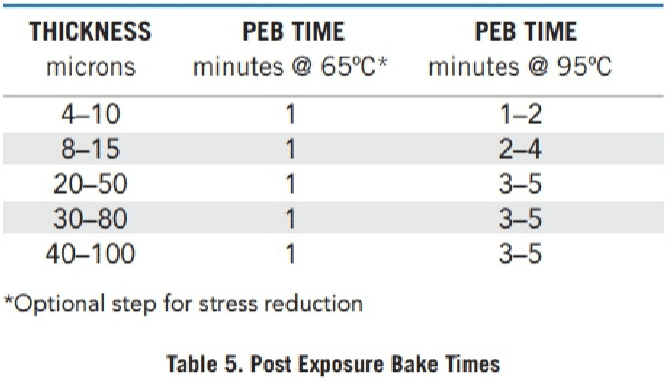
PEB should take place directly after exposure. Table 5 shows the recommended times and temperatures.

Note:

After 1 minute of PEB at 95ºC, an image of the mask should be visible in the SU-8 3000 photoresist coating. No visible latent image during or after PEB means that there was insufficient exposure, temperature or both.

su 3000 table 5

Development

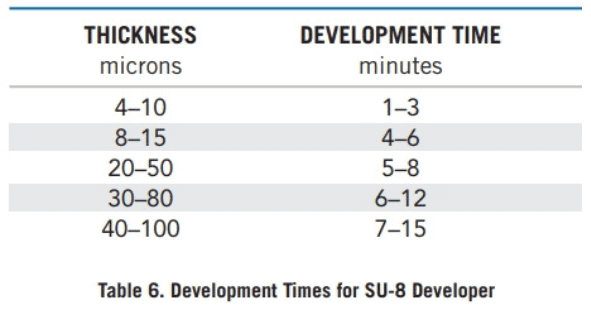
U-8 3000 resist has been designed for use in immersion, spray or spray-puddle processes with Kayaku Advanced Materials’ SU-8 developer. Other solvent based developers, such as ethyl lactate and diacetone alcohol, may also be used. Strong agitation is also recommended for high aspect ratio and/or thick film structures. The recommended develop times for immersion processes are given in Table 6. These develop times are approximate, since actual dissolution rates can vary widely as a function of agitation.

Note:

The use of an ultrasonic or megasonic bath is helpful for developing out photoresist vias or holes.

su 3000 table 6

Downloads