Overview
SU-8 3000 is a high contrast, epoxy-based photoresist formulated for improved adhesion and reduced coating stress. SU-8 3002 dilution is made to accommodate thin film applications such as passivation and protective coatings that don’t require high resolution with recommended process guidelines outlined below. In general, SU-8 3000 is best suited for permanent applications where it is imaged, cured and left on the device.
These processing guidelines are specific to the SU-8 3002 formulation. Please refer to the SU-8 3000 Datasheet for additional information about the product series, cured material properties, and other dilutions.
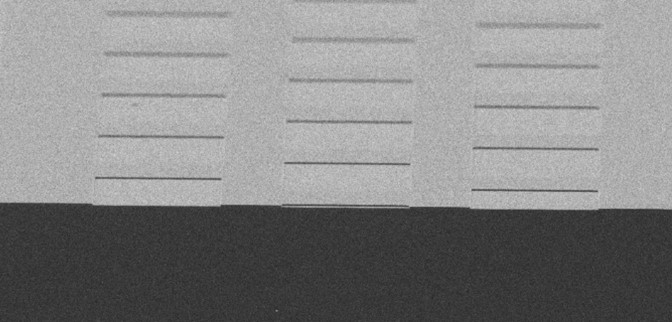
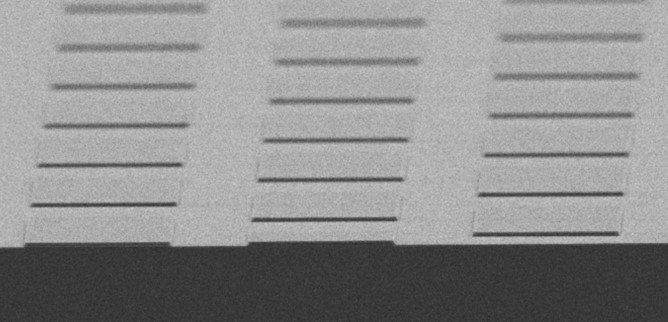
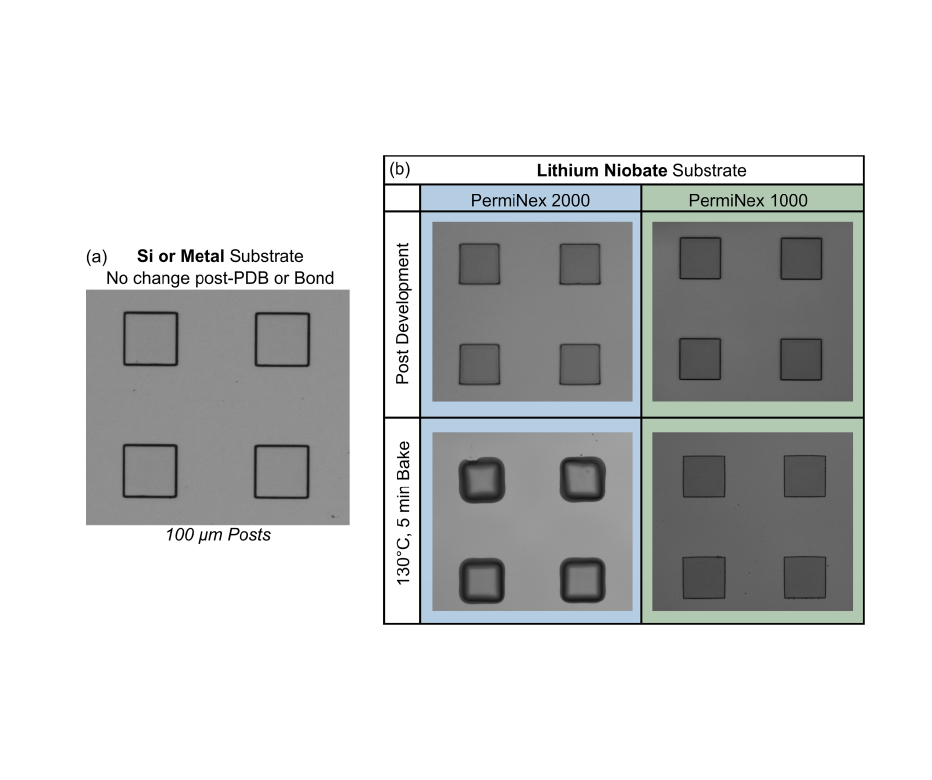
Figure 1. 100 μm square vias (left) and 50 μm square posts (right) in 2 μm thick film of SU-8 3002
Application
SU-8 3002 can be utilized in applications such as passivation for protecting sensitive regions and preventing device failure. It is offered as a cost-effective option for 2-4 μm thick passivation, insulation, and protective layers. Kayaku Advanced Materials’ SU-8 TF 6000 is an alternative option if higher resolution features are required.
Key Features
- ~2-4 μm film thickness
- Improved adhesion compared to SU-8
- Reduced coating stress compared to SU-8
- Solvent-based development
Baseline Process Conditions
SU-8 3002 is a thinner dilution of SU-8 3000. See Table 1 below for properties and Figure 2 for spin conditions to achieve the desired film thickness.
| % Solids | Viscosity (cSt) | Density (g/mL) |
|---|---|---|
| 38.5 | 13 | 1.032 |
Table 1. SU-8 3002 Properties
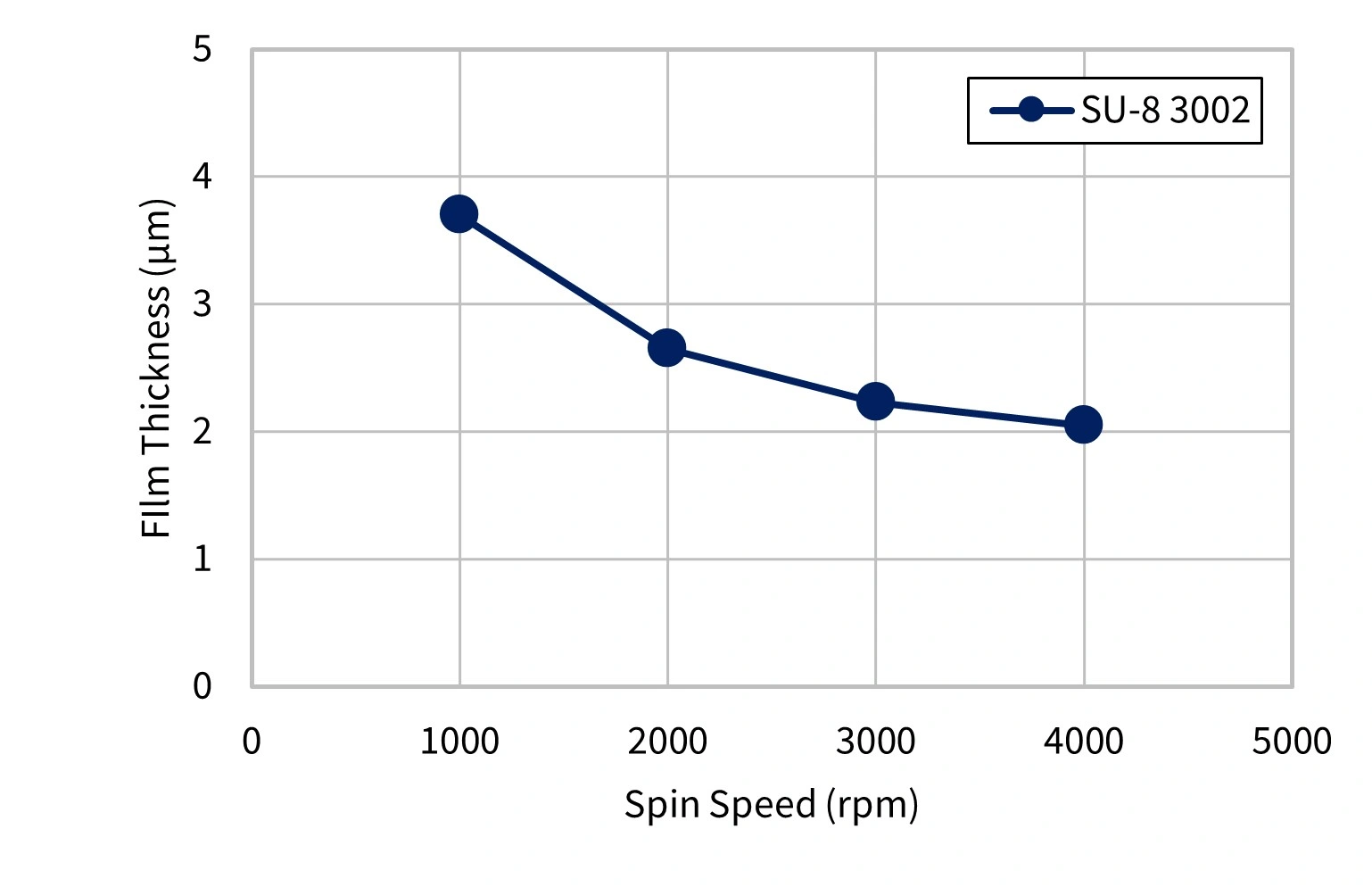
To process SU-8 3002, follow the recommended steps in Table 2 as a baseline. For the baking steps, use of a level hotplate with good thermal control is recommended. Additionally, exposure dose may need to be adjusted depending on substrate type, film thickness, exposure tool, and filter. It is expected that a certain amount of optimization will be required for customer specific systems, facilities, substrates, and applications.
| Processing Conditions | |
|---|---|
| Coat | Dispense 1 mL/inch of substrate 1000-4000 rpm for 30 sec |
| Soft Bake | 0.5–1 min @ 95°C |
| Exposure | 120-200 mJ/cm² (at 365 nm) Verify intensity for your specific tool and filter set-up. |
| Post Exposure Bake | 0.5 min @ 65°C 1 min @ 95°C |
| Development | 1 min in SU-8 Developer |
| Hard Bake (Optional) | 150-200°C for 30-60 minutes |
Table 2. SU-8 3002 Recommended Processing
Industrial Relevance
Passivation layers are thin, protective films deposited on devices to make them inert. These layers are crucial components in electronic devices as they act to protect devices and isolate sensitive areas from contaminants that can cause device defects, and ultimately device failure. They can also be critical to electrical insulation and improving electrical characteristics by mitigating surface leakage currents to increase performance. [1-4] Additionally, SU-8 3000 series provides significantly lower film stress when compared to SU-8 while maintaining good thermal and chemical resistance which are vital for device integration and post-processing. [5]
References
[1] H. S. Kim et. al. Appl. Phys. Lett. 96, 033502 (2010). doi:10.1063/1.3275711
[2] C. Wang et. al. Int. J. Adv. Manuf. Technol. 52, 1011-1018 (2011). doi.org/10.1007/s00170-010-2807-z
[3] M. A. Lopez Castillo et. al. Semicond. Sci. Technol . 35, 125024 (2020). doi: 10.1088/1361-6641/abbd0e.
[4] F. M. Albarghouthi et. al. ACS Appl. Nano Mater. 5, 10, 15865-15874 (2022). doi.org/10.1021/acsanm.2c04098.
[5] B. Reig et al. Jpn. J. Appl. Phys. 53, 08MC03 (2014), doi: 10.7567/JJAP.53.08MC03.